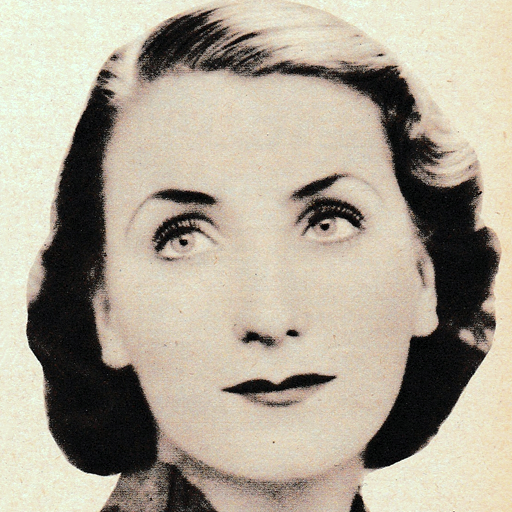
Carroll Gibbons, Eric Whitley

“Scatterbrain” (1939)

“Scatterbrain.” Lyrics by Johnny Burke, music by Kahn Keene and Carl Bean (as “Keene-Bean”) and Frankie Masters. Recorded in London on December 28, 1939 by Carroll Gibbons and His Band (i.e., the Savoy Hotel Orpheans) with vocalists Anne Lenner and Eric Whitley. Columbia FB-2357 mx. CA-17754-1.

Personnel: Carroll Gibbons-p dir. French Sartell-Teddy Jepson-t / Arthur Fenoulhet-t-tb / Paul Fenoulhet-tb / Taffy Hawkins-tb / Laurie Payne-cl-as-bar / Chips Chippendall-cl-as / George Pallat-as / George Smith-cl-ts / Cyril Hellier-Len Lee-Bert Powell-vn / Sid Kruger-2nd p / Bert Thomas-g / Jack Evetts-sb / Syd Bartle-d / Anne Lenner-Eric Whitley-v

Carroll Gibbons and His Band (v. Anne Lenner and Eric Whitley) – “Scatterbrain” (1939)

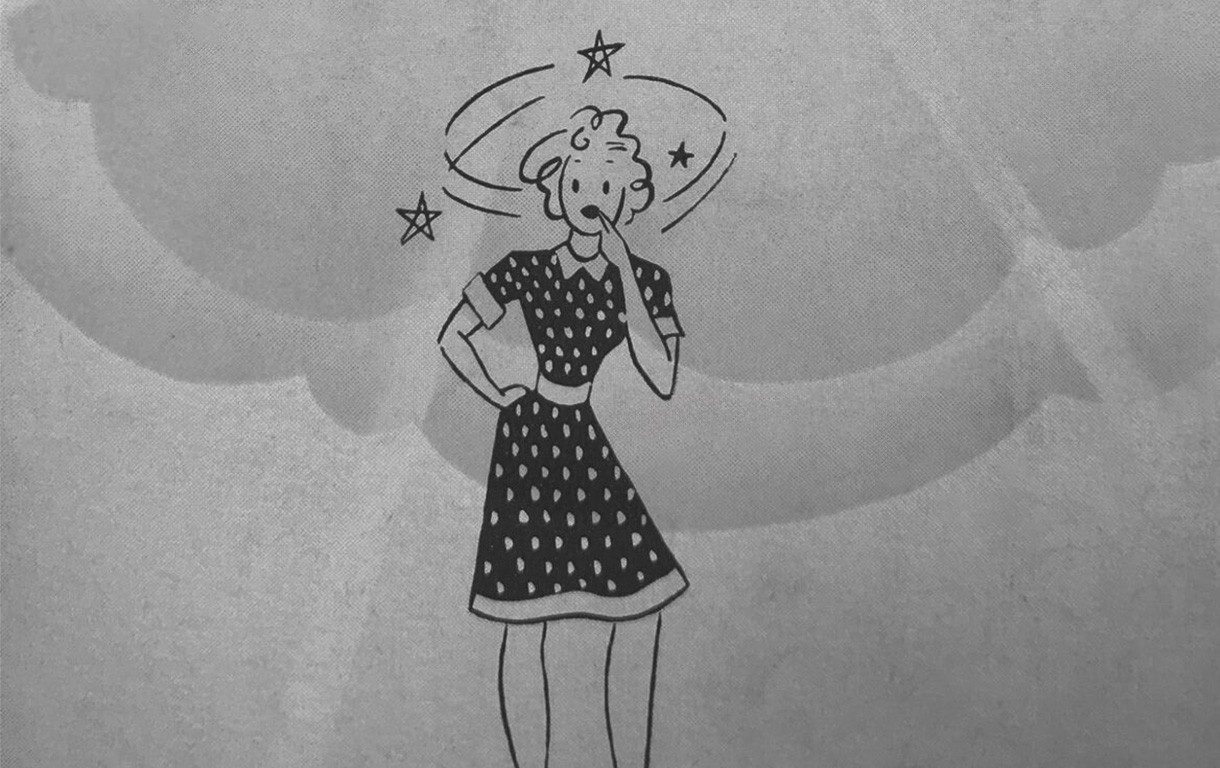
“Scatterbrain”1 features delightfully playful music composed by American big band leader Frankie Masters and his two band members Kahn Keene and Carl Bean (the latter two collaborating under the name “Keene-Bean”) — but the tune’s cleverness is augmented considerably by the witty lyrics of Johnny Burke (who had already had remarkable success with “Pennies from Heaven” and who would go on to write “Only Forever” and “Swinging on a Star”). In the song, the singer’s beloved is described as having many desirable qualities but as being deficient in logic, reason, and polite conversation; he or she would appear to be a “scatterbrain.” There is admirable wordplay, with fun rhymes such as “apoplectic”/”hectic.” A hit in 1939, “Scatterbrain” would continue to be recorded well into 1940, and was featured in a film of the same name.

Burke’s complex lyrics deserve to roll off the tongue of a singer with excellent diction, so it is to our advantage that Carroll Gibbons had that paragon of enunciation, Anne Lenner, as one of his vocalists for his late 1939 recording of “Scatterbrain.” Her delivery is comically deliberate. The refrain is then repeated by Eric Whitley, another of Gibbons’s go-to vocalists at the time. There is something reassuring, I think, by the use of a male-female pair to deliver the funny lines; it is nice to know that being a dim or frenetic love interest is a role open to both sexes.

American bands that recorded “Scatterbrain” in 1939 include Frankie Masters and His Orchestra (v. Frankie Masters), Van Alexander and His Swingtime Band (v. Phyllis Kenny), Benny Goodman and His Orchestra (v. Louise Tobin), Freddy Martin and His Orchestra (v. Glen Hughes), Guy Lombardo and His Royal Canadians (v. Carmen Lombardo, Larry Owen, and Fred Henry), Swing and Sway with Sammy Kaye (v. Charlie Wilson), and the Milt Herth Trio (v. O’Neil Spencer).

The other British bands that recorded “Scatterbrain” in 1939-1940 were Joe Loss and His Band (v. Chick Henderson), Jack Hylton and His Orchestra (v. Sam Browne), Arthur Young and the Hatchet Swingtette (v. Beryl Davis), Oscar Rabin and His Band (one version with Beryl Davis and Garry Gowan, and another purely instrumental one), Ambrose and His Orchestra (v. Jack Cooper), The Organ, the Dance Band and Me (dir. Billy Thorburn/v. Terry Devon), and Billy Cotton and His Band (v. Jack Cooper).

  1. The title is actually hyphenated (“Scatter-Brain”) on virtually every other record label and on the two pieces of sheet music that I have seen — but not on the Carroll Gibbons record. ↩︎
Carroll Gibbons

“Why Stars Come Out at Night” (1935)

“Why Stars Come Out at Night.” Composed by Ray Noble for the Paramount film The Big Broadcast of 1936. Recorded in London on July 20, 1935 by Carroll Gibbons and the Savoy Hotel Orpheans with vocalist Anne Lenner. Columbia FB-1090 mx. CA-15168-1.

Personnel: Carroll Gibbons-p dir. Bill Shakespeare-Billy Higgs-t / Arthur Fenoulhet-t-tb / Paul Fenhoulhet-tb / Sam Acres-tb / George Melachrino-cl-as-vn / Laurie Payne-cl-as-bar / George Smith-cl-ts / Eugene Pini-vn / Ian Stewart-2nd p / Bert Thomas-g / Jack Evetts-sb / Max Abrams-d / Anne Lenner-v

Carroll Gibbons & the Savoy Hotel Orpheans (v. Anne Lenner)
“Why Stars Come Out at Night” (1935)
Transfer by Henry Parsons

Many twentieth-century popular tunes come from the movies. But in some cases, it can be difficult to detect a song that we know from records in the film in which it supposedly originates. Such is the case with “Why Stars Come Out at Night.” Ray Noble, who had relocated from Britain to America in 1934, composed four songs for The Big Broadcast of 1936 (which was actually released in 1935), and “Why Stars Come Out at Night” was filmed with Al Bowlly doing the vocals. Unfortunately, this sequence ended up on the cutting room floor along with a number of other musical sequences.1 Noble appears in the movie directing music on a “televisor” (an early television) that some of the characters watch. I can hear two short musical references — just a handful of notes each time — to “Why Stars Come Out at Night” in the final product.

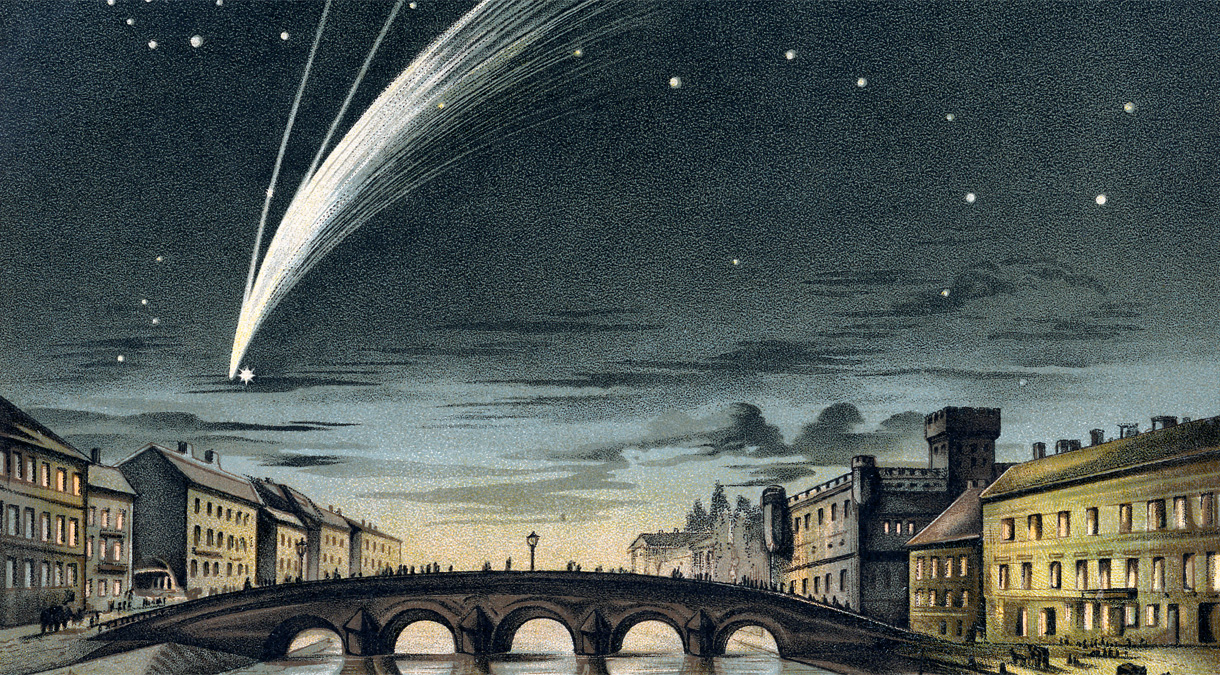
The tune’s near-exclusion from the film says nothing about its quality, as can be determined by charming renditions outside of celluloid on both sides of the Atlantic. The Savoy Hotel Orpheans’ version of the song is particularly representative of the orchestra’s incredible elegance. Anne Lenner’s vocal refrain could best be described as luscious. There is a delightful interplay between her elevated diction and a certain languid quality in her delivery. As she interprets the song’s lyrical conceit, namely that the actions of nature itself are motivated by the loveliness of the song’s addressee, she seems to savor each syllable as she utters it. “Why Stars Come Out At Night” was recorded very early in Lenner’s period of collaboration (1934-1942) with Savoy Orpheans bandleader Carroll Gibbons, but one has the sense that they had already established a recipe for success.

Notable American recordings of “When Stars Come Out at Night” were made by Ray Noble and His Orchestra (v. Al Bowlly), Bill Staffon and His Orchestra (v. Bill Staffon), and Joe Haymes and His Orchestra (v. Ed Kirkeby).

Other British artists who recorded the song included The New Mayfair Dance Orchestra (dir. Carroll Gibbons; an instrumental treatment in a medley), Lew Stone and His Band (v. Joy Worth), Pat O’Malley (with Fred Hartley’s Orchestra), Jack Payne and His Band (v. Billy Scott-Coomber), Jay Wilbur and His Band (v. Pat O’Malley), and Victor Silvester and His Ballroom Orchestra (instrumental).

  1. Pallet, Ray. They Called Him Al: The Musical Life of Al Bowlly. Albany, Georgia: BearManor Media, 2015, loc. 1808 of 9059, Kindle. ↩︎